Last updated: 28 September 2026
App development in Australia costs $15,000 to $50,000 for a simple app or MVP, going by Expeed ($15,000 to $40,000), WebAlive ($15,000 to $50,000) and AppGurus ($20,000 to $50,000). Mid-complexity apps run $40,000 to $150,000 (Expeed), and Expeed and WebAlive both quote $150,000 to $500,000+ for complex apps. For a mobile app built in Australia, Wave Digital gives an overall range of "around $50K to $250K+", and says most production-ready MVPs cost $125,000 to $250,000+.
Those ranges are wide because each agency defines "simple" and "MVP" differently and prices its own team. Below we set out what each guide says, where the figures are shaky, what a mobile app costs on one or two platforms, what drives the price, what you'll pay after launch and how to keep your first version lean. All figures are in Australian dollars and come from the agencies' own published guides, read in September 2026.
App development cost in Australia: what agencies quote in 2026
We haven't averaged these. Each row is one agency's published view, in its own words where possible.
| Source | Simple app / MVP | Mid-complexity | Complex |
|---|---|---|---|
| Expeed Technology (Adelaide), 9 Aug 2026 | $15,000 to $40,000 (4 to 8 weeks) | $40,000 to $150,000 (8 to 16 weeks) | $150,000 to $500,000+ (4 to 12+ months) |
| WebAlive (Melbourne), updated 10 May 2026 | $15,000 to $50,000 (1 to 3 core features) | $50,000 to $150,000 (marketplace, portal) | $150,000 to $500,000+ (fintech, health, AI) |
| AppGurus, updated 22 Jun 2026 | $20,000 to $50,000 (4 to 8 weeks) | $50,000 to $120,000 (standard business app); $120,000 to $250,000 (feature-rich platform) | $200,000 to $350,000+ (enterprise) |
| Conduct, updated 12 Jun 2026 | From $40,000 (simple single-platform MVP) | $80,000 to $200,000 | $400,000+ (feature-rich, cross-platform, with backend integrations) |
| Wave Digital (Melbourne), updated 12 Aug 2026 | Under $75,000: prototype or proof of concept only | Not clearly defined (see below) | $125,000 to $250,000+ (Wave Digital says "most production-ready MVPs fall" here, so this is its MVP tier, not a complex-app tier) |
| 7 Pillars, updated 11 Aug 2026 | From $18,000 (basic app, such as an MVP) | Not given | Over $300,000 |
| Studio Slate, 12 Mar 2026 (compilation of other agencies' figures) | $15,000 to $50,000 in its table, $15,000 to $60,000 in its heading | $80,000 to $150,000 in its table, $60,000 to $150,000 in its heading | $150,000 to $300,000+ |
What a "simple" app means also varies. AppGurus describes it as "a small number of screens, one user role, no real-time data, no payment processing", and says its ranges cover strategy, design, development, QA, launch and initial support. Expeed describes "a simple app with a few core screens, basic login and a standard backend". WebAlive says "many MVPs fall in the $15,000–$50,000 range".
Wave Digital sits well above the others because it treats anything under $75,000 as a prototype. Its $125,000 to $250,000+ tier includes UX/UI design, product strategy and discovery, front-end development, and backend and infrastructure work including security. Its overall range for an Australian-built mobile app is "around $50K to $250K+".
Where the published figures are outdated or inconsistent
Before you put any of these numbers in a pitch deck, know their limits.
- Conduct's tiered table is 2023 data. Conduct's page also shows small ($50,000 to $125,000), medium ($125,000 to $200,000) and large ($200,000+) tiers, but it labels them as the average cost "in 2023". They are not 2026 prices. We've only used the $40,000 floor, the $80,000 to $200,000 mid range and the $400,000+ top end above.
- Wave Digital's middle tier is unclear. The $75,000 to $125,000 section on its page repeats the under-$75,000 text word for word, so we can't tell you what that tier covers.
- Studio Slate's figures don't match each other. Its summary table and section headings give different numbers for the same tier. The page also compiles its ranges from other sources (GoodFirms 2025, 7Pillars, Upscalix, Digital One Agency and IntraCode), so treat it as a round-up, not a quote.
- All of it is self-reported. We found no government or independent survey of Australian agency prices or rates. Every figure here is an agency describing the market it sells into.
Mobile app development cost in Australia
For a mobile app, the platform choice moves the price more than almost anything else. The Australian guides say:
| Source | What it says about mobile apps |
|---|---|
| Wave Digital | An Australian-built mobile app costs "around $50K to $250K+". "Some functionality still needs to be built natively, and every platform must be tested independently". |
| Conduct | Two native builds cost "roughly 1.6-1.8x the cost of one platform"; cross-platform costs "roughly 1.1-1.3x". |
| AppGurus and WebAlive | A cross-platform build (for example with Flutter or React Native) saves an estimated 30 to 40% against two native apps. |
| AppGurus | Example feature costs: login $2,000 to $8,000, payment gateway $3,000 to $12,000, chat $6,000 to $25,000. |
So if you need your app on both iPhone and Android, one cross-platform codebase is usually the cheaper route, on the agencies' own estimates. Check early which of your features need native code. You can read how we approach this in our app development for Australian founders and our mobile app development service.
What drives the cost
The guides broadly agree on the main cost drivers. Wave Digital lists seven: "Number of platforms, Number of screens, App design, Starting point (from scratch or an AI-built prototype), Backend development requirements, API integrations, Number and complexity of features". Expeed, WebAlive, AppGurus, 7 Pillars and Studio Slate give similar lists.
Features and complexity
AppGurus says "complexity drives more than 60% of your total cost" and gives example feature costs: login $2,000 to $8,000, a payment gateway $3,000 to $12,000, chat $6,000 to $25,000 and AI or machine learning $15,000 to $80,000. Conduct calls out "the integration scope that gets underestimated" as a common trap.
Platforms
Building one app for both iPhone and Android with a cross-platform framework such as Flutter or React Native is usually cheaper than two native apps. Agencies commonly estimate the saving at 30 to 40% (AppGurus and WebAlive). Conduct puts it another way: two native builds cost "roughly 1.6-1.8x the cost of one platform", while cross-platform costs "roughly 1.1-1.3x". These are agency estimates, not independent studies. Wave Digital adds a caution: "some functionality still needs to be built natively, and every platform must be tested independently".
Design
AppGurus puts basic design for simple apps at $8,000 to $15,000 and custom design at $15,000 to $40,000+.
Regulation and AI
Studio Slate quotes GoodFirms as saying "regulatory requirements can increase budgets by 30 to 50%". Conduct says AI features "typically add 15-30% to the build cost", plus an ongoing AI running cost that grows with your users.
App development prices: hourly rates, local versus offshore
Hourly rates are the price behind every app development quote, and they vary widely, which helps explain the spread.
| Source | Australian rate (AUD per hour) | Offshore rate (AUD per hour) |
|---|---|---|
| Conduct | $150 to $330 (small to mid-sized agencies); $330 to $495 (larger firms); $577 to $1,400+ (enterprise consultancies) | From $40 (freelancers, offshore) |
| WebAlive | $120 to $200 | $20 to $60 (India or Eastern Europe) |
| AppGurus | $120 to $200 (local team) | $25 to $50 (India or Southeast Asia) |
| Studio Slate (quoting 7Pillars and The Nine Hertz) | $120 to $200 (Sydney or Melbourne); $90 to $150 (regional) | $30 to $70 (India) |
An honest view of offshore versus local. WebAlive says "hiring offshore developers can reduce your overall cost by 30–50%, and, done well, it absolutely works", and the rate gap above explains why. The trade-offs run both ways. A local team shares your time zone, can meet you in person and makes the R&D Tax Incentive simpler: R&D done overseas needs a positive "overseas finding" from the government, and cost savings alone don't qualify (see our R&D Tax Incentive guide). An offshore team costs less per hour, so the same budget buys more build time or more runway, but you'll work across time zones, and quality varies between providers, so you need to check who you're hiring. DevForge is an offshore studio based in Ahmedabad, India, so bear that in mind as you read this.
Ongoing costs after launch
The launch price isn't the full cost. Most of the guides give the same rule of thumb for maintenance:
- 15 to 20% of the build cost per year (Conduct, AppGurus, Expeed, WebAlive and Studio Slate). Conduct says this covers "ongoing maintenance, OS updates, security patches, and minor feature work". Expeed includes hosting and support.
- At least 10% of the total budget, according to 7 Pillars.
- 15 to 25% a year, according to Emerline, as quoted by Studio Slate.
If your product uses AI, Conduct adds an ongoing AI running cost that "scales with active users (typically AUD $200-2,000 per month for a mid-traffic product)".
Also budget for changes after launch. Wave Digital gives an example: with a $200,000 budget, spending $150,000 on the first release and keeping $50,000 for improvements "can help you respond to real user feedback".
How to keep your MVP lean
The cost drivers above point to where you can save. Each of these is a choice about what to build first.
- Cut features to one core job. Complexity is the biggest cost driver in AppGurus' view. Every extra user role, payment flow or real-time feature moves you out of the "simple" tier.
- Launch on one codebase. A cross-platform build, or a web app first, avoids paying for two native apps. Check which features truly need native code.
- Keep integrations to what launch needs. Conduct names underestimated integration scope as a common problem. Add the nice-to-have connections later.
- Use standard design first. AppGurus' basic design range sits well below its custom design range. Polish can follow once you know what users use.
- Start from what you have. Wave Digital counts your starting point, including an AI-built prototype, as a cost factor. Expeed says AI-assisted development "trims routine build time by around 30–40%".
- Hold money back. Keep a reserve for fixes and changes after real users arrive, as in Wave Digital's example.
If parts of your build involve genuine technical experimentation, the R&D Tax Incentive may help, but the rules are strict. Our guide to the R&D Tax Incentive for software startups explains them.
Frequently asked questions
How much does app development cost in Australia?
Australian agency guides published in 2026 put a simple app or MVP at $15,000 to $50,000 (Expeed, WebAlive and AppGurus), a mid-complexity app at $40,000 to $150,000 (Expeed) and a complex app at $150,000 to $500,000+ (Expeed and WebAlive). Wave Digital sits higher, treating anything under $75,000 as a prototype.
How much does mobile app development cost in Australia?
Wave Digital puts an Australian-built mobile app at "around $50K to $250K+". Conduct says two native apps cost roughly 1.6 to 1.8 times one platform, while a cross-platform build costs roughly 1.1 to 1.3 times.
What do app developers charge per hour in Australia?
WebAlive and AppGurus both give $120 to $200 an hour for a local team. Conduct gives $150 to $330 for small to mid-sized agencies and $330 to $495 for larger firms. Offshore rates that cover India run from $20 to $70 an hour across WebAlive, AppGurus and Studio Slate.
How much does an MVP cost in Australia?
Most agencies quote $15,000 to $50,000 for a simple MVP. Wave Digital is the outlier: it says most production-ready MVPs fall between $125,000 and $250,000+.
How much does it cost to maintain an app in Australia?
Most of the guides say 15 to 20% of the build cost per year (Conduct, AppGurus, Expeed, WebAlive and Studio Slate). AI features add a running cost that Conduct puts at typically $200 to $2,000 a month for a mid-traffic product.
How DevForge can help
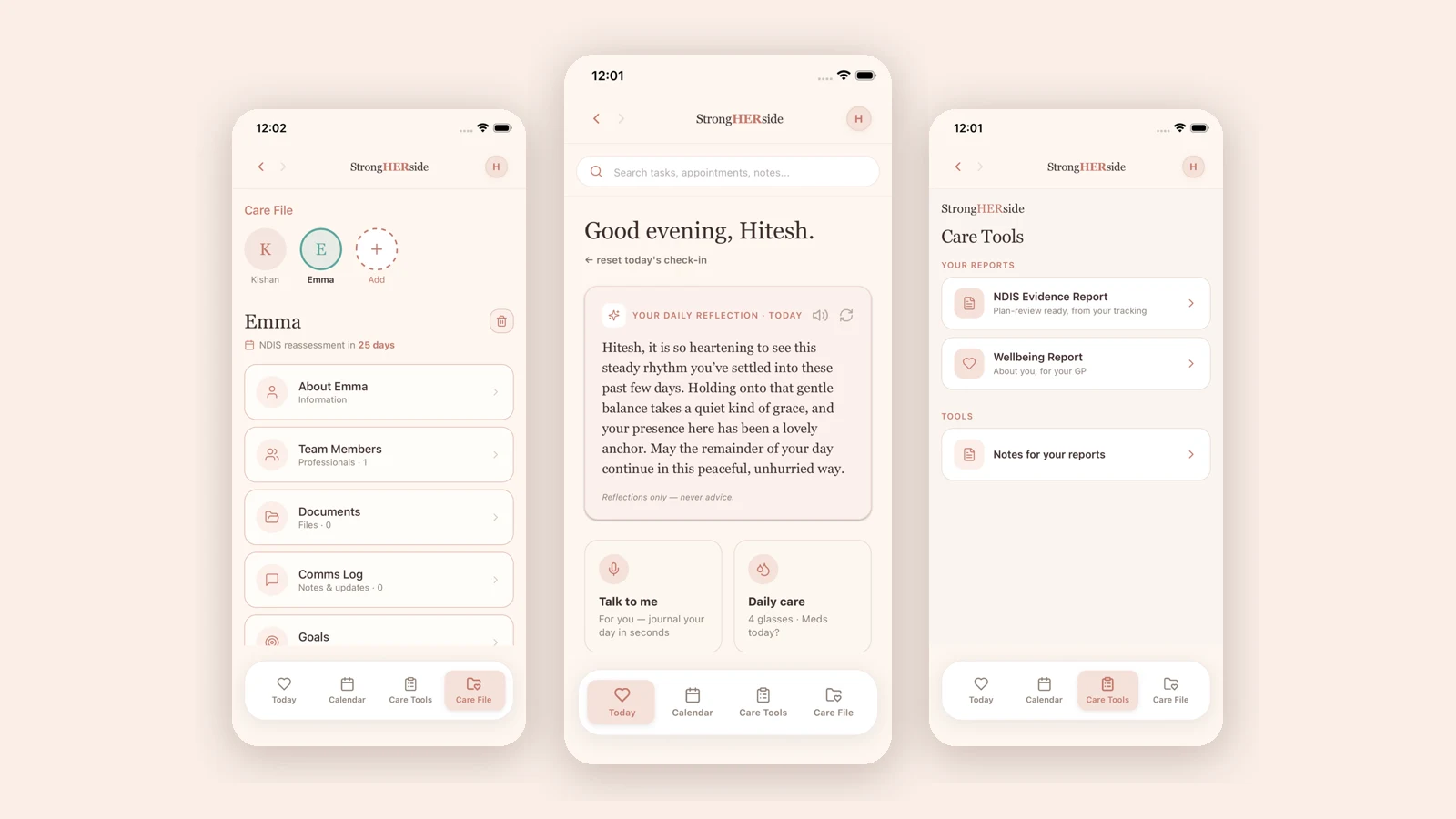
DevForge is a founder-led studio that builds MVPs for Australian founders, with 4 live Australian products: Gooday, Bookish, Metaboly and StrongHERside. We take you from idea to MVP in 4 to 8 weeks, and you own 100% of the code and IP. You can read more about our MVP development and app development for Australian founders, our mobile app development service, or how we work with Australian founders.
We don't publish a price, because it depends on your scope. Instead, we give a fixed estimate for phase 1 after a free 30-minute call. If you'd like one, book a free 30-minute call.
Sources
- Wave Digital, "How much does it cost to build an app in Australia in 2026?", published 1 Jul 2026, updated 12 Aug 2026: https://wavedigital.com.au/blog/how-much-does-it-cost-to-build-an-app-in-australia/
- Studio Slate, "How Much Does an App Cost in Australia? (2026 Guide)", 12 Mar 2026: https://studioslate.com.au/blog/app-development-cost-australia
- Conduct, "How Much Does App Development Cost in Australia in 2026?", first published 17 Jun 2024, updated 12 Jun 2026: https://www.conducthq.com/journal/how-much-does-custom-app-development-cost-in-australia/
- AppGurus, "App Development Cost in Australia 2026", published 24 Nov 2025, updated 22 Jun 2026: https://www.appgurus.com.au/how-much-does-an-app-cost-in-australia/
- Expeed Technology, "How Much Does It Cost to Build an App in Australia? (2026 Prices)", 9 Aug 2026: https://expeed.com.au/articles/app-development-cost-australia
- WebAlive, "How Much Does It Cost to Build an App in Australia in 2026", published 6 May 2026, updated 10 May 2026: https://www.webalive.com.au/how-much-does-it-cost-to-build-app/
- 7 Pillars, "How Much Does it Cost to Develop an App in Australia in 2026", published 16 Jul 2026, updated 11 Aug 2026: https://7pillars.com.au/guides/how-much-does-it-cost-to-develop-an-app-in-australia-in-2026-a-detailed-guide/